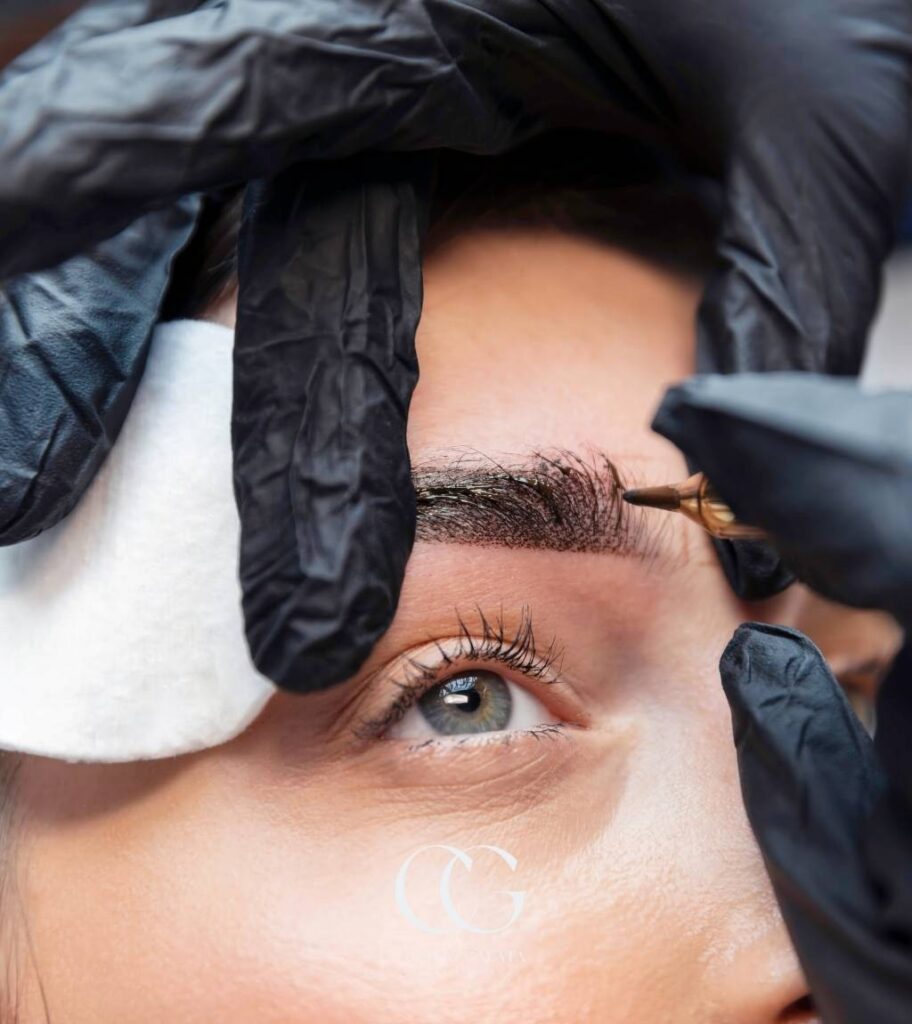
Microblading is a cosmetic tattooing technique that creates fine, hair-like pigment strokes in the brow area. It may be considered to improve the appearance of sparse areas and define brow shape. It does not grow eyebrow hair; the aim is visual fullness between existing hairs.
The brow starting point, arch and tail are designed with your natural facial structure in mind. A preliminary outline is reviewed before treatment. Planning follows existing hair direction and facial expression rather than a uniform template that ignores natural differences between the brows. Discuss your preferred thickness and density clearly.
Oily, sensitive or previously pigmented skin may heal differently. The colour and depth of an existing cosmetic tattoo can affect the new design. Treatment may need postponement if there is active skin disease, infection or a wound. Share medicines and allergies at consultation. Another brow technique may be more suitable in some cases.
The initial appearance may be darker or more defined. Mild flaking and colour changes can occur during healing; avoid scratching and follow the aftercare. A touch-up is assessed according to healed pigment retention. Strokes can soften, colours can change and pigment remnants may persist. Infection, allergic reactions and scarring are possible risks.
No. Pigment strokes create the appearance of hair without producing new growth.
Suitability needs individual assessment. Strokes may blur sooner on oily skin, and alternatives can be discussed.
The existing pigment must be examined first. Not every previous treatment provides a suitable base.
It can fade over time, but complete natural disappearance cannot be guaranteed.
The current brow condition, design requirements and touch-up arrangements affect the quotation.
Contact Clinic Galata to learn about brow design and suitability assessment for microblading.